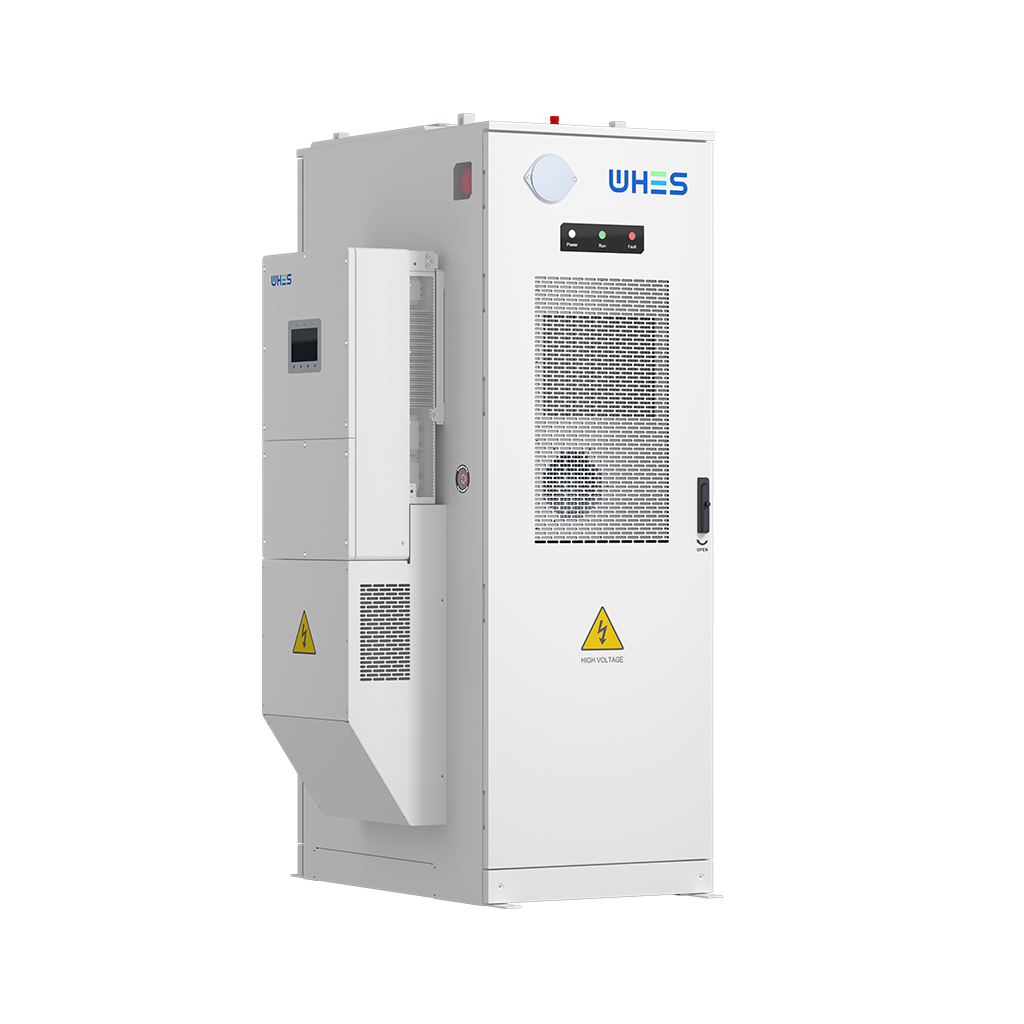
The operational problem: why micro-sags matter
Micro-sags—brief voltage depressions lasting milliseconds—are often invisible to human operators but lethal for automated processes and sensitive electronics. In commercial and industrial facilities they precipitate PLC resets, data corruption, and production stoppages. The problem escalates when redundant sources are present but transfers are imperfect; switch-over delay or reclosure transients convert a momentary voltage dip into a costly downtime event. To mitigate this class of failures, designers increasingly pair fast-acting static transfer switch (STS) solutions with inverter-based ride‑through strategies and on-site utility scale battery storage, forming an integrated front-line defence against micro-sags.
How STS and 15 kW 3‑Phase hybrid inverters solve the root cause
Static transfer switches operate in microseconds to sever a failing source and present an alternate feed without mechanical delay. When an STS is combined with a fast-acting 15 kW 3‑phase hybrid inverter, the inverter can instantly supply local load in grid‑forming or inverter‑assisted modes while the STS selects the most stable upstream source. The pair addresses both transfer time and ride‑through: the STS minimizes interruption at the breaker level, and the inverter provides voltage and frequency conditioning during transients. Key industry terms here include transfer time, ride‑through, and inverter mode—each directly measurable on commissioning reports.
Design considerations and typical architectures
Several practical design choices determine success: placement of the STS (point-of-common-coupling versus load-level), inverter sizing relative to critical load, and control coordination between STS logic and inverter ride‑through thresholds. For a 15 kW inverter, one must verify continuous versus peak output, harmonics performance under non-linear loads, and protection coordination with upstream breakers. The architecture may be AC-coupled or DC-coupled to local batteries; both approaches have trade-offs in response time and complexity. Properly specified, this subsystem reduces micro-sag exposure without imposing large capital cost.
Integration with storage and grid events — practical anchor
Theoretical designs must prove themselves during real grid stress. The February 2021 Texas winter storm illustrated how rapid source degradation and cascading protective trips can overwhelm point solutions; many facilities that had coordinated battery inverters and fast transfer systems sustained operations longer than those relying only on legacy UPS and switchgear. This real-world anchor shows that coordinated STS–inverter–storage solutions offer measurable resilience gains when large-scale outages or frequency excursions occur. For projects aimed at system-wide resilience, integration with large scale energy storage is logical: it supplies capacity for sustained ride-through and permits controlled re-synchronization to the grid.
Common mistakes in specification and commissioning
Practitioners often repeat a narrow set of errors: undersizing the inverter for inrush currents, omitting closed-loop testing between STS logic and inverter control, and assuming vendor defaults for ride‑through thresholds are optimal. A frequent oversight is not verifying transfer timing with actual load conditions; lab bench tests differ from in-situ dynamics. Also, harmonics and neutral currents during transfer phases are underestimated — these can trip protective relays unexpectedly. — It is prudent to require integrated factory acceptance tests and site acceptance tests that use representative loads and include transient capture logs.
Comparisons: STS + hybrid inverter versus traditional UPS approaches
Uninterruptible power supplies (UPS) remain valuable for short-term clean power, but they usually involve batteries sized for minutes and do not simplify source transfer logic. The STS + hybrid inverter model shifts the emphasis: the inverter supports ride‑through and conditioning while the STS optimises source selection. Advantages include lower continuous battery capacity requirement for the same operational resilience, improved power conditioning, and simpler maintenance for long-duration events. Conversely, for sub-millisecond isolation or where galvanic isolation is mandated, traditional UPS or transformer-based solutions may still be preferable.
Implementation checklist and commissioning tips
Follow a clear sequence: 1) Define critical loads and acceptable voltage dip thresholds; 2) Size inverter and battery SOC margins for intended ride‑through duration; 3) Specify STS transfer logic and interlock schemes with protection coordination; 4) Conduct integrated FAT and SAT with transient recording; 5) Document acceptance criteria and maintenance intervals. These steps reduce ambiguity between electrical contractors, equipment vendors, and facility operators.
Advisory: three critical metrics for evaluation
1) Transfer time and transient magnitude: measure actual transfer-to-load and peak deviation during tests. 2) Inverter response and ride-through window: verify that the 15 kW inverter can sustain required load and maintain voltage/frequency within tolerance for the expected outage duration. 3) System-level mean time between failure (MTBF) and historical availability of vendor components: prefer vendors with documented field performance and responsive support.
Conclusion and practical endorsement
Deploying modern static transfer switches coordinated with fast 15 kW 3‑phase hybrid inverters materially reduces micro-sag risk and improves operational continuity — especially when paired with strategically sized battery storage and rigorous commissioning. For facilities seeking proven resilience and pragmatic total cost of ownership, system design that emphasises fast transfer, inverter ride‑through, and tested integration is the correct path. WHES brings this integrated perspective to projects where transfer integrity and energy storage value must be proven in the field. —