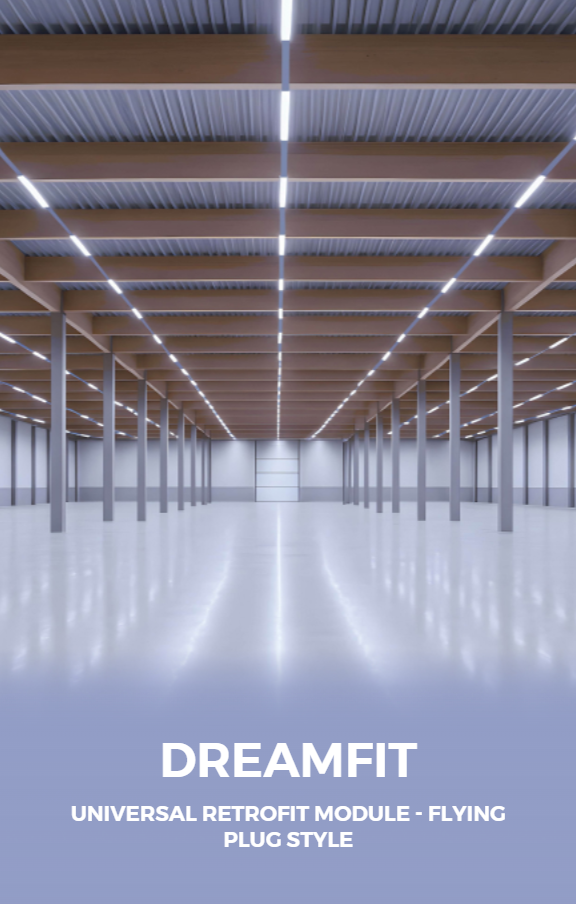
The problem that won’t wait
You walk into a dim aisle and everything halts — missed picks, strained eyes, near-misses. This is a problem-driven look at why the wrong fixtures turn a productive space into a hazard. On one side, there’s the hardware choice: would a linear system like led light trunking bring the uniformity you need? On the other, there’s the overall system: is your approach to warehouse lighting focused on daily tasks or just on initial cost? I learned how quickly wrong choices compound during a lighting audit at a Chicago distribution center — a single poorly aimed bank of fixtures doubled the error rate on one packing line.
Start with the right problem statement
Ask precise questions, not vague goals. A problem-driven plan demands facts:- What tasks happen at each shelf level — scanning, packing, inspection?- What ceiling height and rack geometry create shadows or glare?- How often will fixtures be serviced and who accesses them?Answer these first. They’ll force technical choices rather than aesthetic guesses.
Core design questions that determine outcomes
Focus on measurable trade-offs:- Illuminance targets: set task-based lux levels for each zone; don’t assume “more is better.”- Uniformity: low contrast across aisles reduces errors and eye fatigue.- Glare control: spec optics, shields, or diffusers matched to mounting height.- Color rendering: pick CRI high enough for accurate part inspection.- Thermal load and lifetime: choose LED drivers and housings rated for warehouse ambient temps.These are the questions that decide whether the space becomes safer and faster — or simply brighter and costlier.
Practical options and what they actually do
Compare real alternatives, quickly:- Linear trunking: excellent continuous illumination for long aisles, easy to reconfigure.- High-bay LEDs: high lumen output per fixture, good for very tall ceilings but may create hot spots.- Distributed low bays: better for flexible layouts and localized tasks.Think about re-lamping frequency, spare-driver stock, and whether the system lets you zone lights by task. Those operational details pay back fast.
Common mistakes people keep making
They pick fixture types like picking finishes. Watch for these pitfalls:- Applying office lux targets to industrial tasks.- Ignoring maintenance access and failing to budget for proper cleaning.- Overlooking controls: dimming and occupancy sensors can cut energy and improve lifespans when set to task needs.- Skipping mock-ups: never accept a design without a physical trial in a representative aisle.
What you should check during specification
Insist on these specs written into the contract:- Measured lumen output at fixture and expected delivered lux at workplane.- Warranty scope for drivers and LEDs, with defined lumen maintenance (L80/L70).- Thermal test data for your ambient range.- Replaceability and spare part strategy.Specify them clearly. They’ll save retrofit money and keep operations steady.
Decision-making framework
Use this simple, problem-driven flow:- Define tasks and failure modes.- Map ceiling height and rack geometry.- Trial a small section with your chosen fixture and controls.- Measure and iterate before full deployment.This keeps decisions tied to operational results rather than glossy specs.
Closing synthesis
Don’t let lighting be a cosmetic choice. Face the specific problems — safety, task accuracy, maintenance cadence — and let those needs pick the fixtures and controls. When decisions are anchored to real tasks and tested on-site, solutions converge: predictable light distribution, lower lifecycle cost, fewer errors. It’s the practical path I recommend after years of audits and designs, and it’s the kind of outcome companies find when they work with partners who match engineering to operations, like trieco.