
The Hook
Commercial sites are increasingly evaluating battery systems around the 200kWh class to reduce peak-demand exposure, increase solar self-consumption, provide backup capability, and improve energy-management flexibility. Choosing the best system is difficult because capacity alone does not determine suitability. Buyers must also compare inverter architecture, battery chemistry, thermal management, safety certifications, software, warranty terms, installation requirements, service coverage, and the ability to expand or integrate with an existing energy system. This article assesses six brands with established energy-storage portfolios and compares their stated commercial positioning. The options have been reviewed against publicly available manufacturer information, with particular attention to how each brand may fit a 200kWh commercial application. Exact model availability, configurations, and local approvals should be confirmed with the manufacturer or an authorised distributor before procurement. This comparison of 200kWh commercial battery storage Brands is a starting point; buyers should verify product fit, published specifications, and supplier capabilities before purchasing.
Full List of Top 6 Brands
- SolaX — Integrated commercial and industrial energy-storage solutions
- Growatt — Solar, inverter, and energy-storage systems for commercial applications
- Fortress Power — Lithium battery and energy-storage solutions
- Fox ESS — Solar inverter and commercial energy-storage portfolio
- GoodWe — Commercial and industrial inverters, batteries, and energy-management systems
- GSL Energy — Lithium battery and containerised energy-storage solutions
Comparison Table
| Brand | Key Products | Key Features | Best For |
|---|---|---|---|
| SolaX | Commercial and industrial ESS platforms, including the ESS-AELIO family | Integrated battery, inverter, and energy-management approach; configurable commercial capacity | Businesses seeking a coordinated solar-plus-storage solution |
| Growatt | Commercial inverters, batteries, and energy-storage systems | Broad solar ecosystem and monitoring-oriented system architecture | Commercial sites already using or considering Growatt equipment |
| Fortress Power | Lithium battery systems and scalable energy-storage products | Battery-focused portfolio with modular system design | Projects prioritising battery storage flexibility and staged deployment |
| Fox ESS | Residential, commercial, and industrial inverter and storage solutions | Integrated solar-storage portfolio with commercial system options | Solar projects requiring a unified inverter and storage supplier |
| GoodWe | Commercial inverters, Lynx battery systems, and energy-management products | Established inverter portfolio and commercial energy-management capabilities | Commercial solar installations requiring broad inverter integration |
| GSL Energy | Rack, cabinet, and containerised lithium battery systems | Scalable battery configurations for commercial and industrial applications | Projects needing flexible battery packaging or larger system expansion |
Detailed Reviews
1. SolaX
SolaX is an energy-technology manufacturer with a portfolio spanning solar inverters, batteries, and energy-storage systems. Its commercial and industrial offering is positioned around coordinated hardware and software rather than a battery-only product. For a project targeting approximately 200kWh, the relevant assessment should focus on the exact SolaX system configuration, power rating, operating voltage, installation environment, grid requirements, and Australian availability.

SolaX’s commercial-storage approach is represented by platforms such as the ESS-AELIO family, which is designed to combine battery storage, power conversion, and energy-management functions in a commercial system. The principal advantage of this architecture is the potential for a more unified design, although the final performance and economics depend on the selected inverter-to-battery ratio, operating profile, tariff structure, and commissioning settings. Buyers should request current datasheets, warranty conditions, compliance documentation, and service arrangements for the precise 200kWh-class configuration.
Pros / Key Features
- Broad product coverage across solar generation, battery storage, and energy management.
- Commercial and industrial systems intended to coordinate storage with photovoltaic generation and site loads.
- Potentially simpler vendor coordination when the inverter, battery, and control platform are sourced from one manufacturer.
- Capacity and power configurations can be assessed against peak-shaving, backup, and solar-self-consumption objectives.
- Strong fit for projects that require a complete commercial energy-storage architecture rather than a standalone battery cabinet.
Use Cases / Best For
- Commercial buildings seeking to shift solar energy into higher-value operating periods.
- Sites evaluating peak-demand management and load optimisation.
- Businesses that want battery, inverter, and monitoring functions coordinated through one supplier ecosystem.
- New solar-plus-storage installations where the system can be designed around the site’s required power and duration.
Before purchase, the project owner should confirm whether the proposed SolaX configuration is nominally 200kWh or uses a nearby usable-capacity value, as nominal and usable energy are not interchangeable. Installation clearances, fire-safety provisions, grid connection rules, maintenance access, warranty exclusions, and local technical approvals should also be documented.
2. Growatt
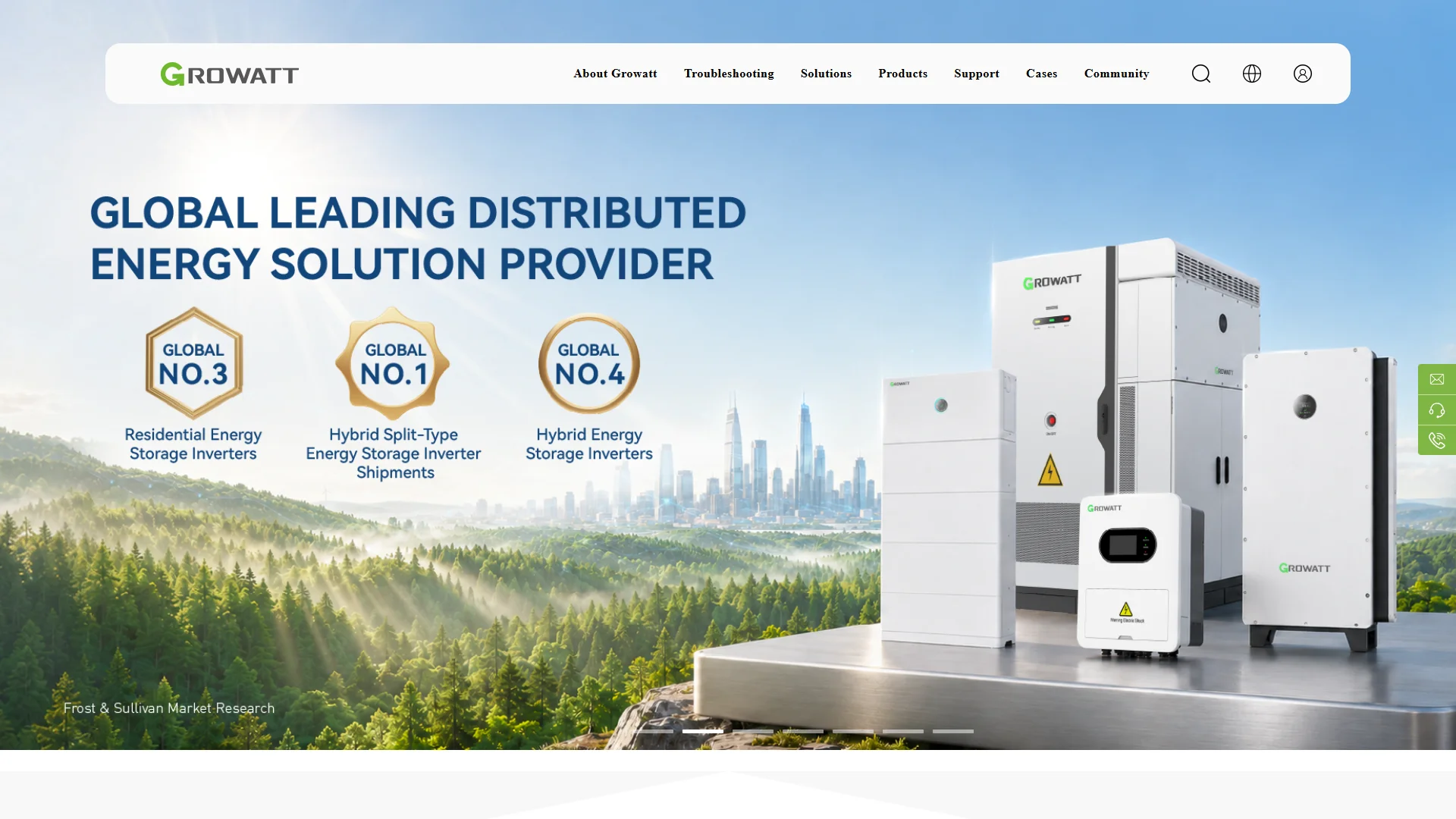
Growatt supplies solar inverters, batteries, and energy-storage products for residential and commercial markets. Its commercial relevance comes from the combination of power-conversion equipment, storage, and monitoring within a broader solar ecosystem. The exact route to a 200kWh installation depends on the selected battery units, inverter architecture, site voltage, and whether the project requires grid-connected, backup, or hybrid operation.
Pros / Key Features
- Portfolio covering solar inverters and battery-storage equipment.
- Suitable for comparison where the customer wants storage integrated with a solar installation.
- Commercial designs can be assessed according to required power, duration, and expansion plans.
- Monitoring and system-control requirements can be incorporated into the technical evaluation.
Use Cases / Best For
- Commercial solar sites considering the addition of battery storage.
- Projects that value compatibility across a single solar and storage ecosystem.
- Businesses requiring a system sized for load shifting, self-consumption, or backup objectives.
3. Fortress Power
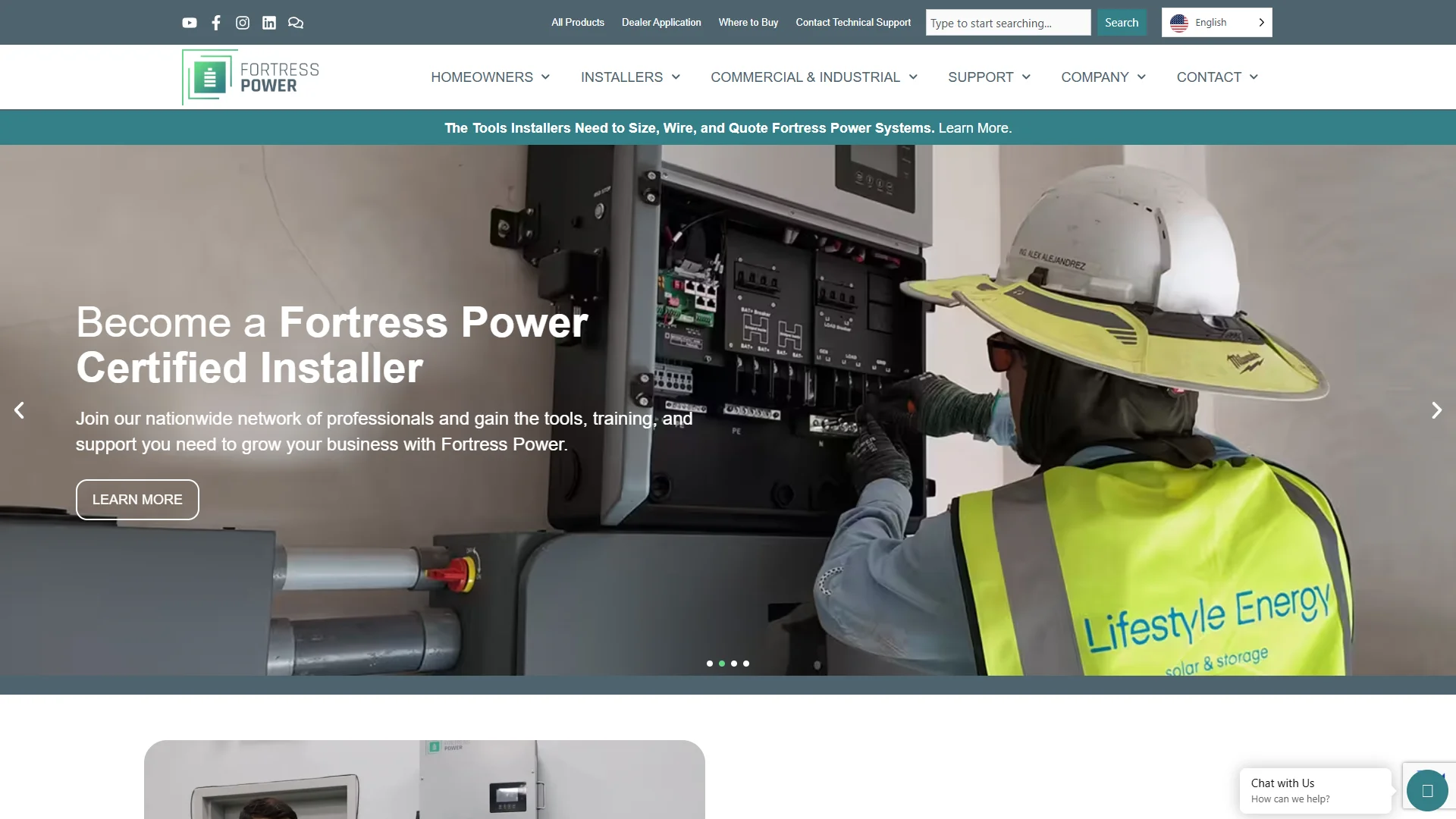
Fortress Power focuses on lithium battery and energy-storage products for residential, commercial, and other distributed-energy applications. Its battery-centred positioning can appeal to developers that want to assemble a storage system around defined battery modules, racks, or cabinets rather than selecting a single integrated package. A 200kWh project should be evaluated for usable energy, continuous power, inverter compatibility, system controls, and the required balance-of-system equipment.
Pros / Key Features
- Dedicated focus on lithium battery energy-storage products.
- Modular battery approaches can support staged capacity planning where permitted by the system design.
- Useful for projects that want to compare battery equipment separately from the power-conversion system.
- Technical evaluation can be tailored to the site’s discharge duration and expansion requirements.
Use Cases / Best For
- Commercial facilities needing battery capacity for solar self-consumption or load management.
- Installations where modularity and future capacity planning are important.
- Projects with an engineering team capable of coordinating batteries, inverters, controls, and safety systems.
4. Fox ESS
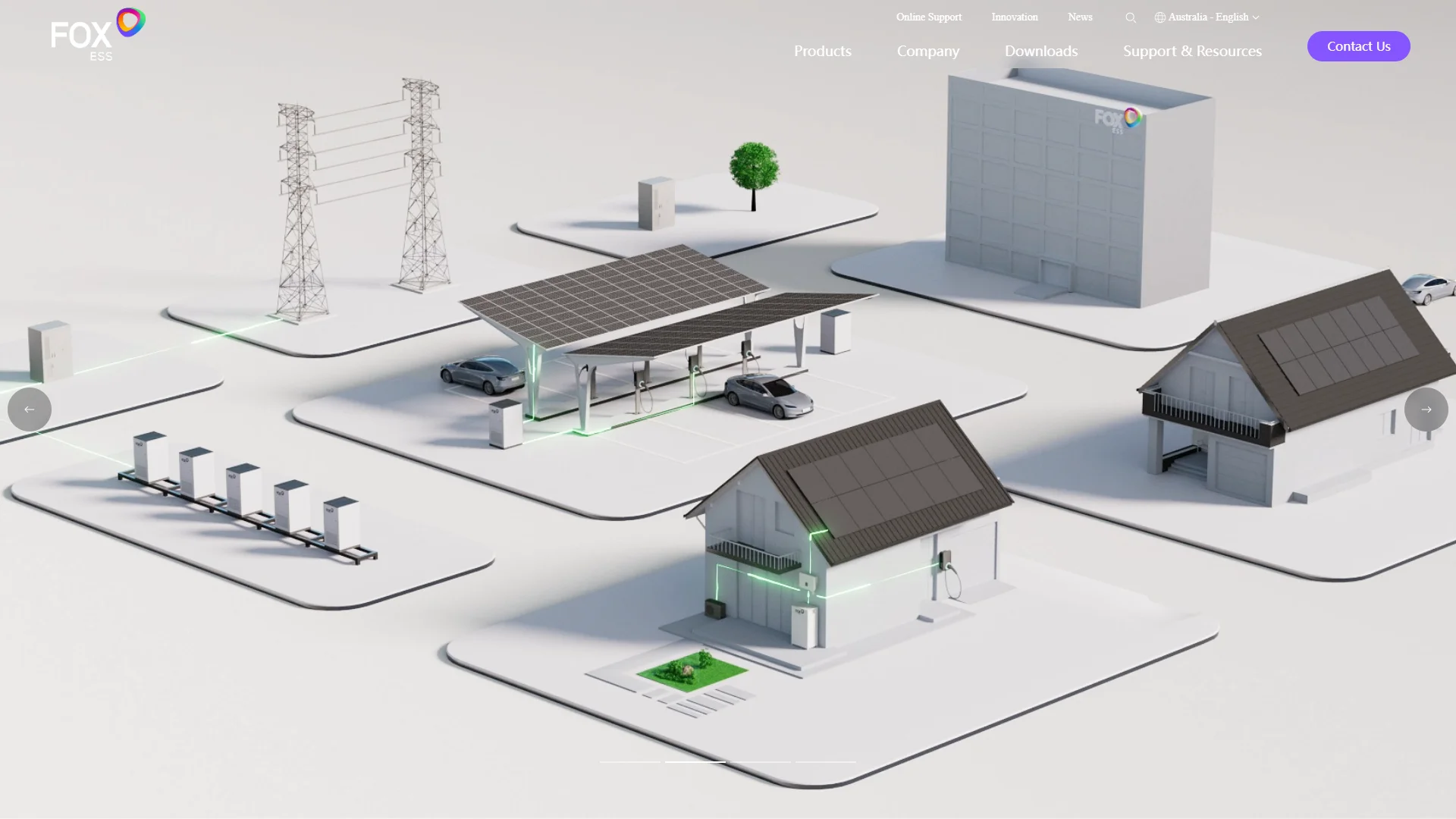
Fox ESS develops solar inverters and energy-storage products across residential, commercial, and industrial segments. Its commercial proposition is relevant to customers looking for a coordinated solar-and-storage supplier, although the suitability of a particular system depends on the available commercial product range in the target market. For a 200kWh application, buyers should verify the battery configuration, inverter power, communication protocol, usable capacity, and grid-compliance documentation.
Pros / Key Features
- Product coverage spanning solar conversion and energy storage.
- Commercial and industrial positioning supports evaluation beyond residential battery systems.
- Can be considered for new-build solar-plus-storage projects and selected retrofit applications.
- System selection can be matched to the site’s load profile, operating schedule, and backup requirements.
Use Cases / Best For
- Businesses seeking one supplier for solar inverters and storage equipment.
- Commercial premises evaluating battery-backed solar generation.
- Projects where the installer can confirm product availability, commissioning support, and local service coverage.
5. GoodWe
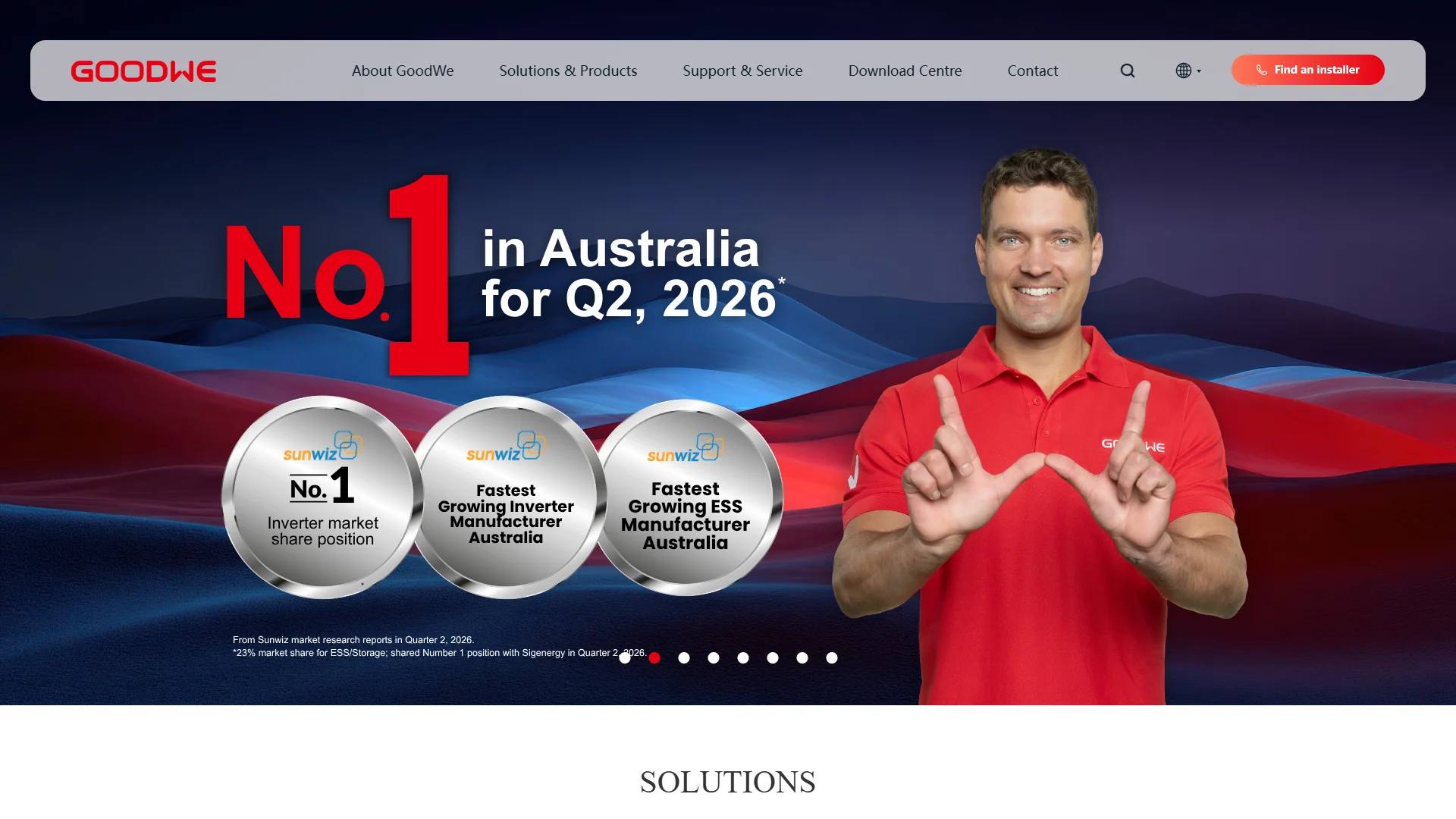
GoodWe is known for solar inverters and has expanded into battery storage and energy-management products for residential, commercial, and industrial applications. Its commercial portfolio includes inverter and battery options that can be assessed for larger solar-plus-storage systems. The suitability of a 200kWh design depends on the selected battery family, system power, installation topology, and the integration requirements of the site’s existing electrical infrastructure.
Pros / Key Features
- Established focus on solar inverters alongside energy-storage equipment.
- Commercial product selection can support comparison of power-conversion and battery requirements together.
- Relevant to projects that need energy management linked to solar generation and site consumption.
- Broad product coverage may help installers design systems for different commercial load profiles.
Use Cases / Best For
- Commercial solar facilities requiring integrated inverter and battery evaluation.
- Businesses seeking to improve self-consumption or manage demand charges.
- Projects where installer experience with GoodWe monitoring and commissioning tools is available.
6. GSL Energy
GSL Energy supplies lithium battery products in formats that include rack-based, cabinet, and larger energy-storage configurations. This packaging flexibility can be relevant to commercial projects that need approximately 200kWh but have different space, access, cooling, and expansion constraints. The final system is likely to involve more than the battery itself, so the buyer must assess inverter matching, battery-management communication, protection equipment, installation design, and local compliance.

Pros / Key Features
- Battery portfolio covering multiple physical formats for different installation conditions.
- Suitable for comparison where a project may require modular or containerised storage.
- Can be evaluated for commercial solar integration, backup, and load-shifting applications.
- Flexible packaging may help address site-specific space and deployment requirements.
Use Cases / Best For
- Commercial and industrial sites requiring scalable lithium battery capacity.
- Projects with unusual space, access, or expansion requirements.
- Installations supported by an experienced integrator capable of validating the complete battery system.
How to Choose a 200kWh Commercial Battery Storage System
- Define the operating objective. Peak shaving, solar self-consumption, backup, tariff arbitrage, and demand response can require different power ratings and control strategies.
- Separate nominal from usable capacity. A system advertised near 200kWh may provide less usable energy after operating limits and reserve requirements are applied.
- Check power and duration. Energy capacity indicates how much energy can be stored, while inverter power determines how quickly the system can charge or discharge.
- Review chemistry and safety design. Confirm the battery chemistry, cell and module protection, thermal management, fire-safety provisions, enclosure rating, and applicable certifications.
- Confirm grid and site compatibility. Voltage, phase arrangement, export limits, protection settings, communications, physical access, and local connection rules must be checked before ordering.
- Evaluate software and controls. The system should support the intended dispatch schedule and provide useful data for alarms, state of charge, performance, and maintenance.
- Compare warranty and service terms. Review throughput limits, retained-capacity conditions, response times, replacement procedures, exclusions, and local technical support.
- Assess total installed cost. The battery is only one part of the project; include inverters, switchgear, civil works, fire systems, communications, commissioning, permits, and ongoing maintenance.
- Plan for future capacity. Confirm whether additional cabinets or modules can be added later and whether expansion must occur within a specified period or configuration.
Final Verdict
SolaX ranks first for buyers seeking a coordinated commercial solar-and-storage ecosystem and a manufacturer with dedicated commercial and industrial energy-storage positioning. Growatt and GoodWe are notable where solar-inverter integration and an established monitoring ecosystem are priorities. Fortress Power is relevant to battery-focused and modular designs, while Fox ESS suits projects comparing a unified solar and storage supplier. GSL Energy is worth considering when packaging flexibility and scalable battery formats are central to the project.
No brand is automatically the best choice for every 200kWh installation. The correct selection depends on usable energy, discharge power, site conditions, local compliance, integration requirements, lifecycle cost, and the quality of the installer’s support. Procurement teams should obtain current technical documents and a project-specific quotation before making a final decision.
FAQs
Is 200kWh enough for a commercial facility?
It depends on the facility’s load profile, operating hours, peak demand, solar generation, and required backup duration. A load study should determine both the required energy capacity and the required inverter power.
What is more important: battery capacity or inverter power?
Both matter. Capacity determines how long the system can supply or absorb energy, while inverter power determines the rate of charging and discharging. A system with sufficient kWh but inadequate kW may not reduce short, high-demand peaks effectively.
Should a business choose an integrated system or separate battery components?
An integrated system may simplify coordination between the battery, inverter, and controls. Separate components can provide more flexibility in system design and supplier selection. The decision should consider compatibility, certification, service responsibility, expansion plans, and total installed cost.