Introduction — A little shop story, some hard numbers, and one plain question
I was sittin’ in my garage one Saturday, watchin’ a small print finish and thinkin’ about the smell — you know the one — and how long I’d been lettin’ that cloud hang in the room. A 3D printer fume extractor can change that picture quick, and studies show printers can release VOCs and ultrafine particles that raise indoor PM2.5 levels (sometimes two to three times higher than normal). So, what do you do when your workspace starts actin’ like a fog machine for bad air?
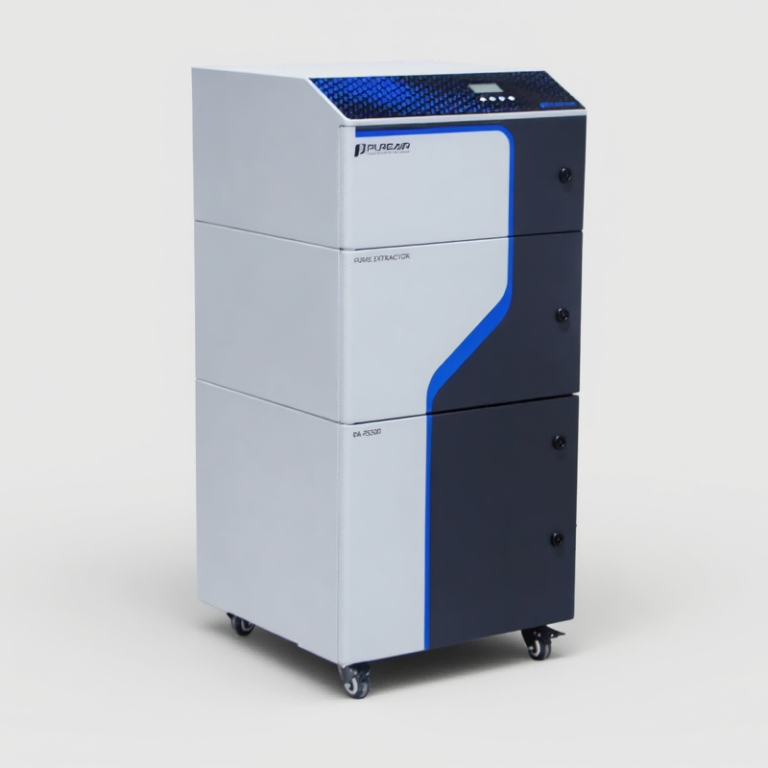
I’ll tell ya straight: most hobby setups ignore filtration and airflow, and that costs you health and parts. I want to share practical steps I’ve learned from fixing shop air and from folks runnin’ small production lines. We’ll look at why simple fans ain’t enough, what a real fume extractor brings to the bench, and where to start — without drownin’ in jargon. Now hold on — we’ll walk through the finer bits next, step by step.
Why old fixes fall short: the real pain in dust collection for additive manufacturing
dust collection for additive manufacturing often gets treated like an afterthought. I’ve seen shops duct a box fan to a filter and call it a day. That approach fails to capture the small stuff — the VOCs and ultrafine particulate — because it lacks proper capture velocity and filtration stages. Look, it’s simpler than you think: you need targeted capture, staged filtration, and metrics to prove it’s working.
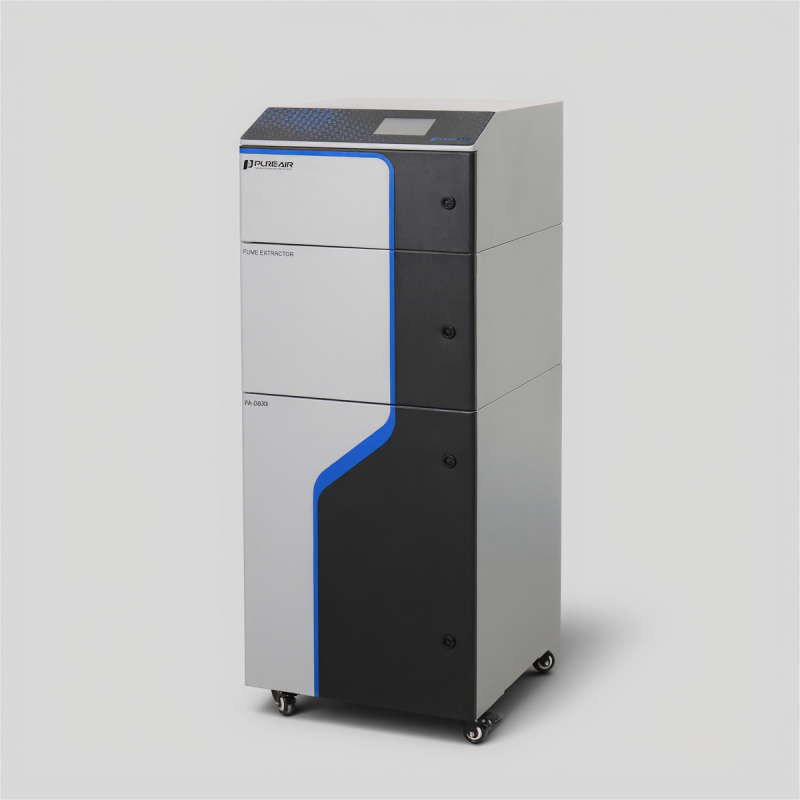
What’s breaking?
First, many DIY systems miss the capture point. If the hood or inlet isn’t close to the nozzle, fumes escape. Second, single-stage filters (cheap foam or thin carbon sheets) won’t trap VOCs or fine particulates — you want a pre-filter, HEPA stage, and an activated carbon stage for odors and gases. And finally, airflow rate and filtration efficiency matter. I measure in cubic feet per minute and watch pressure drop across the filter. Too low, and you don’t clear the air; too high, and you blow prints around. These are practical gaps folks skip when they’re in a rush — but they’re the reason many fix attempts fail.
What’s next — new principles and how to pick the right system
Looking forward, I favor systems that treat the problem in layers. Start with source capture — a hood or enclosure that keeps fumes from spreading. Combine that with staged filtration: a coarse pre-filter, a HEPA stage for particulates, and an activated carbon bed for VOCs. You’ll see more units add monitoring: simple sensors that report VOC levels and airflow, sometimes even with basic edge computing nodes to log data — helpful if you run multiple machines. The dust collection for additive manufacturing space is moving toward smarter, validated solutions rather than ad-hoc fixes.
How should you judge a system?
Here are three metrics I use when I buy or recommend equipment: 1) Capture effectiveness at the nozzle (percent of emitted plume captured), 2) Filtration efficiency across particle sizes and VOC removal, and 3) Verified airflow rate and pressure drop to ensure long-term performance. Measure those, compare spec sheets to real tests, and ask for sensor logs if possible — you’ll avoid a lot of guesswork. Also — funny how that works, right? — the cheapest unit rarely saves you money long term.
To wrap up: I’ve spent time fixing bad setups and testing better ones. I want you to walk away with a straight plan: capture close to source, use staged filtration, and verify performance with numbers. That’s how you stop the smell, cut exposure to fine particulates, and keep prints clean. If you need reliable gear or want to see what a tested system looks like, check solutions from PURE-AIR.