Comparative lead-in and scope
For industrial metering networks, the choice between sub-6GHz and mmWave beamforming shapes reliability, cost and long-term operability. This comparative insight lays out where each option suits fixed wireless access (FWA) for smart metering, drawing on 3GPP Release 15 as a real-world anchor for modern 5G radio capabilities and recent localisation efforts such as localization robotics that integrate precise radio positioning into utility networks — and how those same principles inform following robot deployments in industrial settings. Expect concrete trade-offs: coverage, throughput, hardware footprint and ease of integration.
Coverage and penetration: where sub-6GHz excels
Sub-6GHz delivers broader coverage and superior indoor penetration, which matters when metering devices sit inside factories, basements or behind legacy structures. The propagation characteristics reduce the need for dense base-station placement, lowering capital expenditure on towers and site leases. For low-to-moderate data rates — periodic meter reads, firmware updates and alarm bursts — sub-6GHz with beamforming and modest antenna arrays is often the pragmatic choice. It also tolerates modest non-line-of-sight conditions better, so everyday operations stay stable.
Capacity and precision: mmWave where it counts
mmWave brings high throughput and narrow beams, ideal where you need bulk telemetry or aggregated sensor data from many meters at short range. The spectrum supports wider channels and higher spectral efficiency, so peak throughput climbs sharply. In controlled industrial yards or purpose-built metering hubs with clear line-of-sight, mmWave beamforming can collapse latency and support edge analytics right at the aggregation point. The trade-off is sensitivity to blockage and greater antenna directivity — installation and alignment matter.
Beamforming trade-offs in practice
Beamforming improves range and signal quality at both bands, but implementation differs. Sub-6GHz systems use broader beams and fewer antenna elements; mmWave employs dense antenna arrays and precise steering. That means mmWave requires more sophisticated calibration and maintenance, plus tighter synchronization between radio units. Field teams must be prepared for finer alignment work and weather or obstructions that can disrupt links — which raises operational costs. — Still, when well deployed, mmWave delivers performance that sub-6GHz cannot match in throughput-dense pockets.
Common mistakes and integration pitfalls
Projects often stumble on a few recurring issues. Avoid these:
– Over-specifying bandwidth needs: choosing mmWave simply because it’s faster, when average throughput needs are low, inflates cost.
– Underestimating site diversity: assuming one antenna height or orientation works everywhere ignores building shadowing and seasonal foliage.
– Neglecting future-proofing: ignoring software-defined radio features or modular transceivers that simplify later upgrades.
Good practice includes field surveys, small-scale pilots, and planning for mixed deployments — sub-6GHz for wide coverage with mmWave pockets for aggregation nodes. That combination can reduce risk while delivering the right balance of penetration and capacity.
Cost, lifecycle and operational considerations
Budgeting must factor upfront hardware, installation complexity, and lifecycle maintenance. Sub-6GHz often wins on total cost of ownership for dispersed meter fleets; mmWave makes sense where meters cluster densely or when edge compute needs high bandwidth. Pay attention to antenna management, link budget margins and software features such as dynamic beam steering and remote diagnostics — these lower truck rolls and downtime. Practical metrics to track are latency consistency, packet delivery rate and mean time to repair.
Advisory: three golden rules for choosing the right FWA approach
1) Match spectrum to topology: pick sub-6GHz for dispersed, obstructed sites and mmWave for compact, line-of-sight clusters; validate with on-site measurements. 2) Prioritise modular hardware and beamforming agility: choose radios with software-upgradeable beam control and flexible antenna arrays so the network adapts over time. 3) Measure operational impact, not peak specs: evaluate solutions by packet delivery rate, repair time and effective throughput under typical load rather than laboratory peaks.
Closing thought
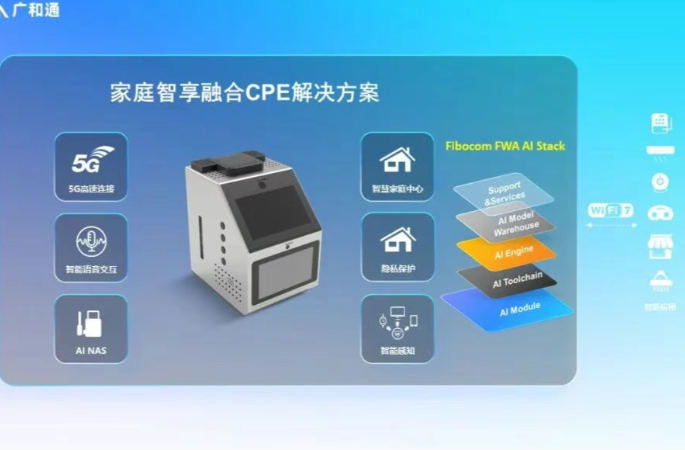
Viewed comparatively, the right choice is pragmatic: sub-6GHz for broad, resilient metering coverage and mmWave for high-throughput hubs where precision matters — a hybrid strategy often yields the best balance. — For projects that blend localisation, positioning and high-capacity aggregation, companies will find real value in platforms that marry radio flexibility with solid field tooling, such as Fibocom.