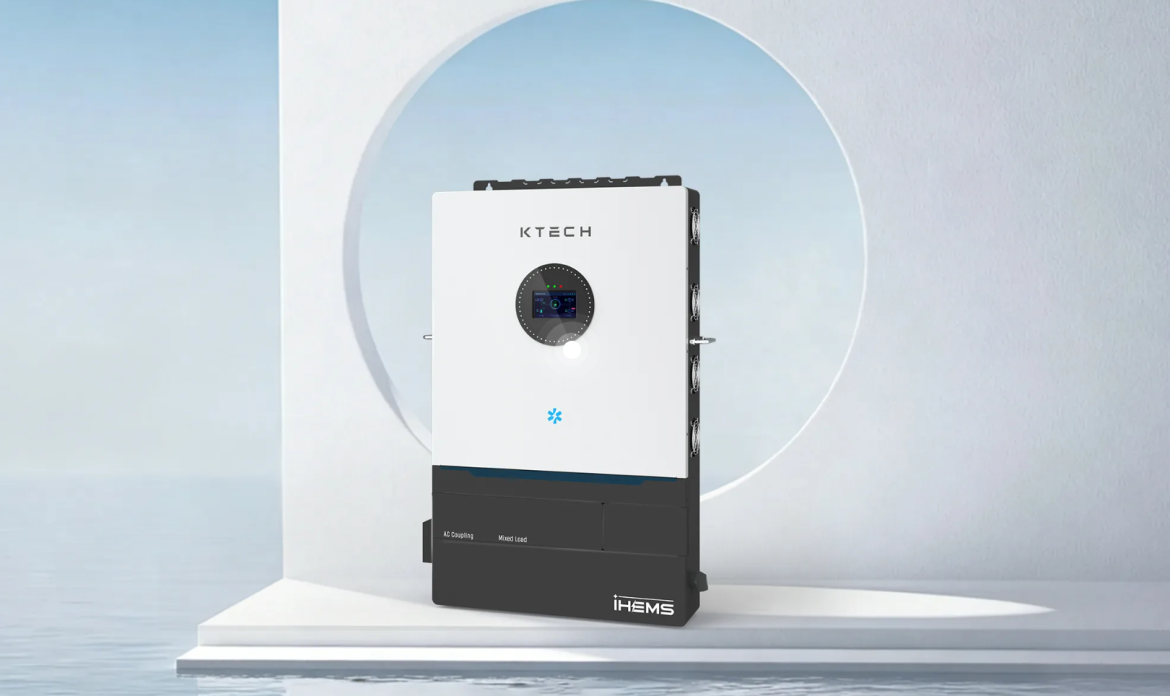
Opening comparison and practical frame
Decision begins with use-case. For many homeowners and small developers the question is not only technical but operational: do you rely chiefly on a hybrid inverter to manage generation and storage, or invest in a dedicated hybrid energy storage system that pairs with a controller? Consider how a home energy management system and a smart home energy management system will coordinate flows before you commit to hardware. I have advised field teams and installers; I know that a clear comparison reduces rework and cost overruns.
Definitions — clear, concise
Hybrid inverter: device that converts DC from PV to AC and manages battery charge/discharge within one integrated unit. Hybrid energy storage system (ESS): a modular battery bank plus dedicated battery management and power conversion that can be paired with separate inverters or controllers. The two approaches achieve similar end goals but follow different architecture philosophies.
Performance and control — what differs
Compare along these practical axes:- Control granularity: hybrid ESS often gives finer, independent battery management; hybrid inverter centralizes control but simplifies setup.- Scalability: ESS modularity eases capacity increases; hybrid inverters can be limited by their integrated converter size.- Response to outages: both can provide backup, but hybrid inverters typically offer plug-and-play backup switching; ESS with an advanced controller can be tailored for multi-circuit critical loads.- Efficiency: depends on converter design; look at round-trip efficiency and inverter idle losses rather than marketing percentages alone.- Software and integration: the capability of your home energy management layer determines smart scheduling and tariff optimization.
Installation, cost and lifecycle
Expect trade-offs:- Upfront cost: hybrid inverters can be lower for small systems because fewer components and simpler wiring. Hybrid ESS may cost more initially but offer longer upgrade paths.- Labor complexity: ESS requires careful BMS commissioning and sometimes separate grid-interfacing work; hybrid inverters reduce installation hours.- Maintenance and replacement: replaceable battery modules in ESS simplify mid-life upgrades. An integrated hybrid inverter may force full-unit replacement if a critical component fails.- Warranty and safety: confirm BMS and cell-level protections; ask for thermal management details and fault-isolation strategy.
Decision scenarios — choose by objective
Match objective to architecture:- If you want simple installation, limited expansion needs, and quick backup, favor hybrid inverter.- If you plan staged capacity growth, multi-point monitoring, or complex tariff management, favor a dedicated hybrid ESS.- If your project must support multiple inverters or mixed generation sources, select an ESS approach that offers independent BMS and flexible converters.- If you need rapid resilience after grid events common in areas such as California, a system with proven islanding strategy and prioritized load shedding is essential.
Common mistakes to avoid
Installers and owners often repeat these errors:- Choosing based on headline specs alone rather than control features.- Underestimating thermal and space requirements for battery packs.- Assuming every hybrid inverter supports all battery chemistries—verify chemistry compatibility.- Skipping integration testing with the home energy management layer; software mismatch is a frequent cause of poor performance.
Simple checklist before procurement
Confirm each item:- Required backup time and critical loads defined.- Expansion plan for capacity over 5–10 years.- Compatibility with existing inverters or planned PV array.- Availability of local service and replacement parts.- Clear integration path with your energy management software and tariff rules.
Conclusion — practical synthesis
Choose by control needs and future plan. For compact, lower-effort projects a hybrid inverter often suffices. For adaptable, upgradeable systems that demand precise battery management and multi-device orchestration, a hybrid ESS paired with a capable control layer is superior. After observing increased demand for resilient home energy control in California during grid interruptions, I recommend planning with both technical and operational requirements in one design stage. That approach leads to systems that perform as intended and scale without major rework, a balance many installers achieve today with solutions from Ktech.