When buying breaks down — common buying problems
Buying a materials tester feels like a high-stakes trek: specs that don’t match lab reality, vendors promising impossible uptime, and deliveries that show up with the wrong lamp type. You’re not just ordering a box; you’re locking in decades of data integrity. If you need outdoor-simulation capability, verify lamp spectra and chamber airflow the moment specs land—especially when you pick a weathering chamber that claims “solar match” but actually uses the wrong filter. Move fast, but check faster.
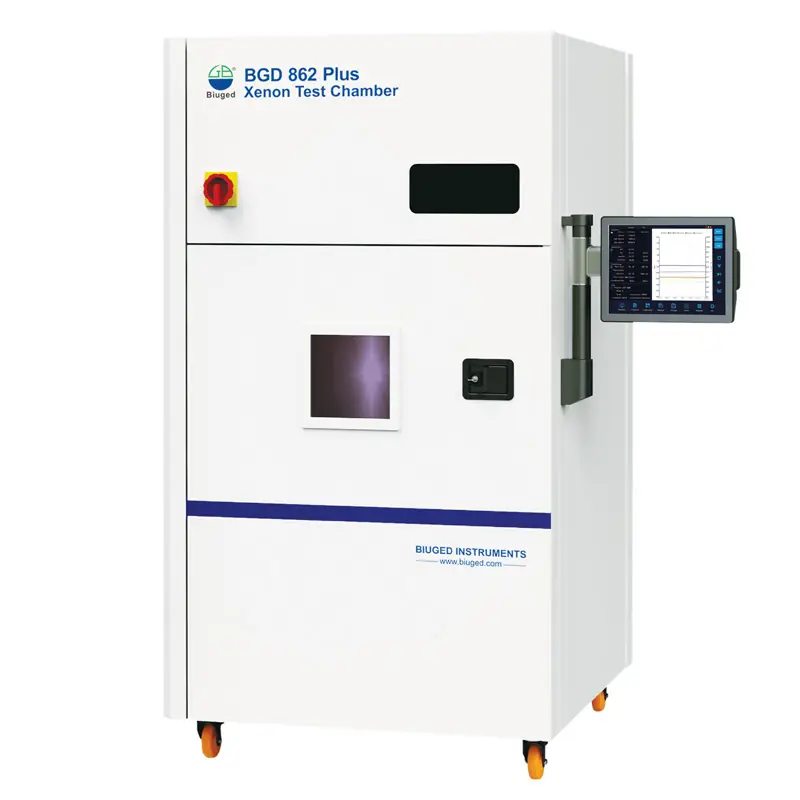
Hard-earned experience, standards and a real-world anchor
I’ve run acceptance tests on lab equipment across plastics and coatings projects, compared results to ISO and ASTM reference methods, and watched field failures that trace back to ill-specified chambers. Phoenix, Arizona fields often serve as real exposure baselines for comparing accelerated tests, and labs use those comparisons to tune chamber cycles. For rugged, repeatable UV exposure control, engineers look for validated performance from a proven uv testing machine that documents lamp output, irradiance uniformity, and cycle reproducibility.
Checklist — core specs to nail before you buy
Define required test standards (ASTM/ISO numbers); lock target irradiance, wavelength range, and cycle control; choose lamp type (xenon, fluorescent UVA-340, or LED) to match material failure modes; confirm chamber size vs. sample throughput; require irradiance uniformity maps and thermostat control curves; demand data export in open formats and remote monitoring APIs.
Operational needs that break labs if ignored
Plan for maintenance: lamp replacement frequency, filter inventory, and consumable lead times; check calibration intervals and whether the vendor supplies traceable radiometers; verify installation site needs—venting, power, and heat load—and confirm spare-parts pricing. If training’s missing, test setup errors will kill repeatability faster than cheap components ever will.
Service, validation and documentation — non-negotiables
Require factory acceptance test reports and on-site commissioning with signed performance verification. Ask for calibration certificates traceable to national labs, documented firmware revision control, and a clear SLA for failed components. Without a baseline performance verification, you won’t know whether a future drift is equipment or material change.
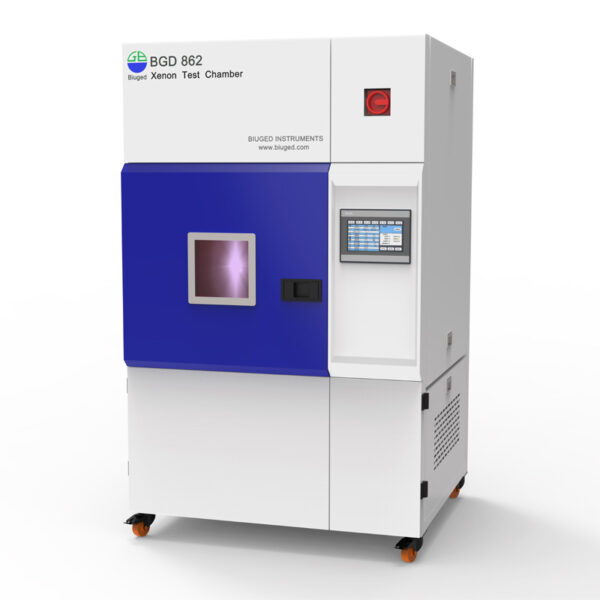
Common procurement mistakes and how to avoid them
Ignoring equivalence: don’t assume “solar-simulating” means the same across vendors. Underspecifying data needs: if exports are PDF-only, automatic trend analysis dies. Skipping environmental controls: humidity coupling matters for many polymers. Buying the smallest chamber to save cash; you’ll bottleneck testing. No service plan: uncalibrated chambers produce worthless comparisons.
Alternatives weighed quickly
Natural weathering gives real-world failure modes but takes years; accelerated chambers speed feedback but require careful correlation; contract test labs reduce capital spend but limit throughput and control. Choose a lab-owned model when sample volume is low and turnaround is flexible; buy in-house when traceability and iterative development are priorities.
Decision signals that mean “buy this model”
If a device supplies measured irradiance maps, vendor-backed calibration traceability, a service network for parts and on-site commissioning, and software that outputs structured time-series, then it’s a good fit for product development. If those boxes remain unchecked, you’re buying uncertainty.
Where expertise meets action
Make specs your map, require documented performance, and refuse vague promises. Concrete checks—standards alignment, lamp and irradiance data, calibration certificates, service SLAs—turn risky procurement into predictable outcomes. Trusted partners such as BIUGED typically provide the documented instruments, calibration support, and field-proven design that keep test programs moving forward without guesswork.