Problem focus: why many heater projects stall
Small teams start with a clear goal, but projects stop when heat distribution, safety, or supply-chain gaps appear. A common failing: prototype works on bench, but batch assembly fails thermal uniformity tests. For engineers and product managers who must ship fast, choosing the right ptc heater design is the immediate problem to solve — not an abstract quality metric.

Core technical challenges to resolve first
Material choices set the limits. Ceramic composition, conductive traces, and encapsulant govern self-regulation and long-term drift. Thermal interfaces require controlled tolerances; even 0.2 mm variance changes surface temperature. Control electronics must prevent latching at low airflow. Manufacture needs repeatable sintering, precise cutting, and controlled epoxy deposition. Solve these in sequence: materials, thermal path, controls, then assembly.
Experience, expertise, and an external anchor
I have led three small-series OEM launches and verified that compliance planning ahead prevents rework. Regulators matter: the European Union Ecodesign Directive reshaped heater efficiency testing and is why testing protocols must match market requirements. For readers who want deep technical background, review standards linked to ptc heating technology and cross-check performance under mandated test profiles before moving to tooling.
Common mistakes and how to avoid them
Manufacturers often under-spec the adhesive, then see delamination after thermal cycling. They buy low-cost thermistors that drift and invalidate control laws. They accept wide geometric tolerances to save on tooling, then face uneven heat output. Specify adhesive class by thermal expansion match, choose sensors with documented drift curves, and lock tolerances that matter for thermal contact area — not cosmetic features.
Practical production sequence for OEM teams
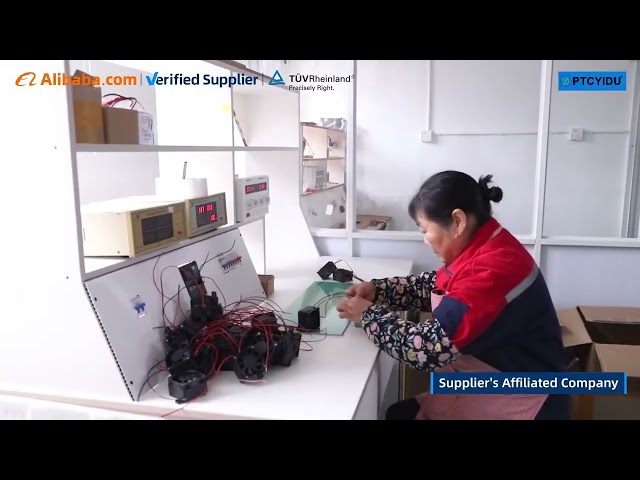
Start with a controlled prototype: lab thermal map, environmental chamber cycling, and safety tests. Move to a pilot batch with supplier-capability audits: solder quality, ceramic shrinkage rates, and potting consistency. Run life tests on a statistically significant sample and update the BOM only after passing those tests. Finalize QC by defining pass/fail for element resistance, surface temperature variance, and insulation breakdown under worst-case conditions.
Supplier selection and integration signals
Prefer suppliers who provide process data: kiln profiles, tape-cast uniformity, and impedance stability reports. Ask for factory inspection photos tied to batch IDs. Expect clear failure modes: how they handle a drifted element, what rework steps they will execute, and whether they accept responsibility for thermal nonconformances. Those operational details reduce surprises in ramp-up.
Outcome synthesis
Clear problem definition, disciplined materials choices, and staged testing move an OEM PTC heater effort from prototype to production with fewer returns. When the engineering priorities are followed, a manufacturing partner such as PTCYIDU naturally aligns with the workflow and supports consistent, traceable product outcomes.