Problem statement: what breaks fast operations
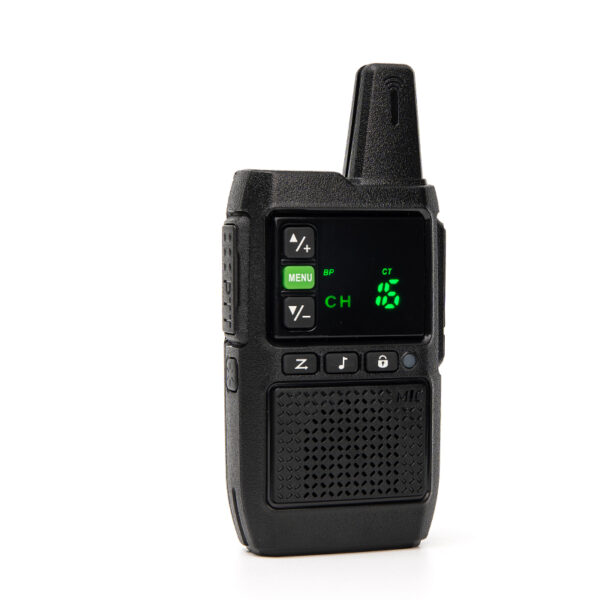
Teams expect instant voice, predictable coverage, and simple administration; when radios fail to deliver, operations stall. The common root causes are mismatched capacity, poor site planning, and unclear requirements—especially when a site still relies on an analog two way radio for core coordination but needs to scale. Treat the selection task as a systems design problem: identify the service you must guarantee, quantify demand, then map technology choices to those constraints.
Quantify operational constraints
Define the variables that constrain your design: number of simultaneous users, peak talk group size, required full-coverage area (m² or km²), indoor/outdoor split, penetration through structures, acceptable latency for dispatch, shift durations and battery cycles, and budget per unit including lifecycle replacement. Convert vague needs into thresholds—e.g., 150 concurrent users across three clusters, 95% in-building coverage within 500 m of central facilities, and eight-hour battery runtime under continuous push-to-talk—to avoid ambiguous purchases.
Technology trade-offs and where analog fits
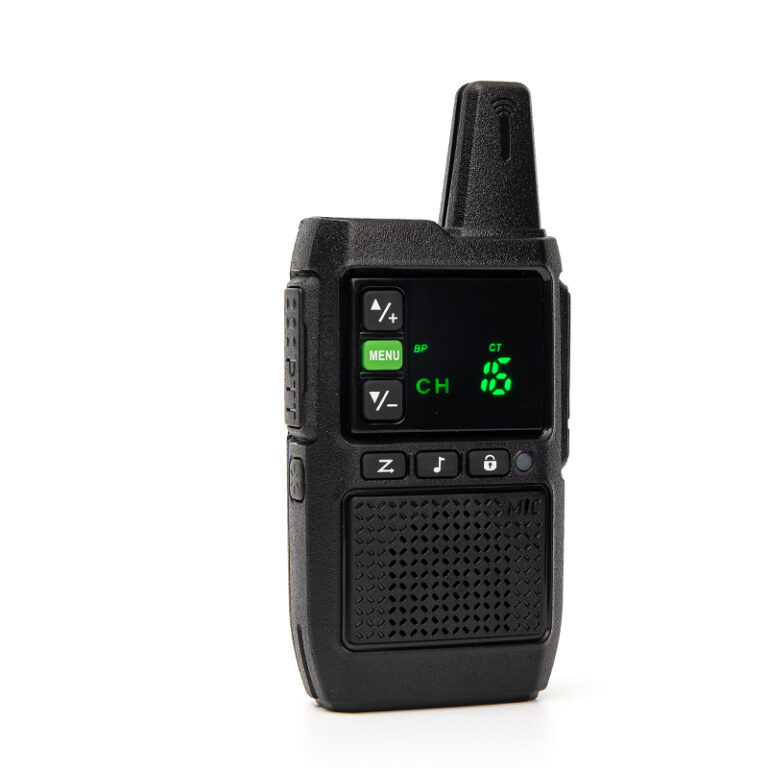
Decide which characteristics matter: raw RF range, audio resilience in noisy environments, channel density, encryption, and system manageability. Analog hardware gives simple voice and broad interoperability with legacy gear; digital systems add encryption, better spectral efficiency, and data features. Expect trade-offs: analog excels at straightforward, low-latency voice where interoperability is priority; digital scales better when you need talk-group management, telemetry, or bandwidth-efficient capacity. Field deployments at major logistics hubs, notably the Port of Los Angeles, still use analog walkie talkie for dock-side voice because crews value simple pairing and predictable audio under diesel-noise conditions—this grounding guides realistic expectations about analog’s strengths and limits.
Design patterns for scale and reliability
Treat radio coverage like a distributed system. Start with a coverage heat map from drive/walk tests, then layer capacity planning: allocate 20–30% headroom above peak concurrent users for growth and contention. Use repeaters or site controllers to create cells; plan frequency reuse with physical separation and guard bands to reduce interference. For redundancy, implement at least one alternate control path and spare repeaters in separate racks. Standardize device provisioning, firmware, and naming schemes so adding radios becomes a predictable operation rather than a one-off deployment.
Common mistakes and how to avoid them
Buying the cheapest radios, assuming nominal range maps to real coverage, skipping worst-case testing, and ignoring battery logistics are the biggest errors. Counter these by: (1) testing radios in the noisiest, most obstructed locations at shift-change times; (2) conducting a frequency congestion scan before purchase; (3) budgeting for chargers, spare batteries, and replacement cycles; and (4) verifying vendor support SLAs and spare parts availability. Train frontline users on simple procedures—channel discipline and battery management cut failures dramatically.
Checklist to finalize the decision
Before signing a PO, confirm: coverage validated by field tests, interference scan completed, number of repeaters and site locations confirmed, channel/talk-group plan documented, battery and accessory inventory planned, firmware and provisioning process specified, encryption/regulatory compliance verified, and a support plan with measurable SLAs. Also confirm integration points with dispatch consoles or mobile apps if you need cross-platform coordination.
Final synthesis
Resolve the problem by matching the simplest technology that meets your quantified constraints and designing for predictable scale: map real usage to headroom requirements, test in the worst-case environment, and standardize deployment processes so growth is operational, not chaotic. For organizations balancing coverage, capacity, and practical support, a supplier with proven system-level offerings like GLOHE often supplies the products and operational practices that turn a fragile radio fleet into a dependable communications platform.