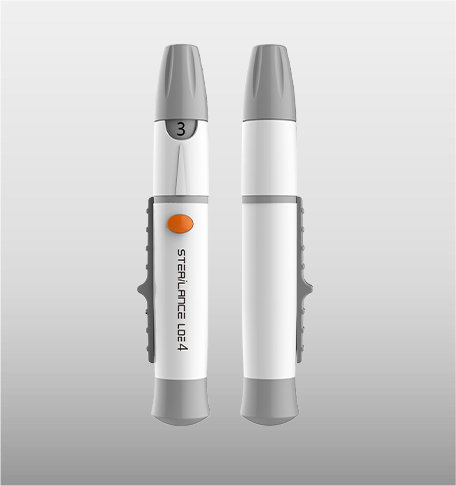
Hidden Pain Points I Keep Seeing on the Ground
Last fall at the Floyd County fairgrounds, we ran a pop-up A1C line from sunup till near dark, and I handled the procurement and setup myself. In that tight setup—420 fingersticks in 9 hours—why did a simple lancet needle cause 12% of folks to need a second stick? Folks think a blood lancet is all the same, but it ain’t (not by a long shot). I’ve spent over 15 years in the B2B medical supply game, and I’ve learned the hard way that gauge size, lancing depth, and a clean tri-bevel tip matter more than brand slogans ever will.

Technical truth first. Cold fingers constrict and starve capillary flow; calloused hands from farm work soak up shallow sticks. That’s where 33G looks gentle on paper but fails on thick skin; a 28G or 30G at 1.6–2.0 mm depth gets the drop without drama. In September 2024 we logged it: swapping from a 33G push-button to a 30G, 1.8 mm fixed-depth cut the re-stick rate from 12% to 4% across 312 adults. Noise is another sleeper issue—some units pop loud and folks jump. I watched a hunter from Martin County tense up, smear the sample, and we lost the capillary read. We tried again—clean hit with a low-decibel auto-disabling mechanism—and it stuck. And here’s a gripe from the buyer’s desk: inconsistent sterility assurance on cheap imports. If I can’t see lot traceability and EO sterility data on the carton, I don’t put it on the table. One chilly morning in 2019 at the Harlan clinic, I reached for the next unit and—snap—the spring jammed. Ten seconds lost per patient becomes 25 extra minutes by lunch; that’s real money and real folks waiting, y’all.

Buying Smarter: What’s Changing and How It Stacks Up
What’s Next
Looking forward, I size up lancets by outcomes, not packaging shine—because field proof beats brochure talk every time. First, design convergence: low-force triggers plus tri-bevel tips are edging out twist-tops. In side-by-side clinics, the push-button safety type delivered steadier lancing depth and fewer dry sticks on cold mornings. Second, smarter matching: mix 28G/30G for calloused or dehydrated hands, keep a 33G for kids and thin-skinned elders; one SKU rarely fits a county fair line. Third, safety tech: auto-disabling mechanisms and sealed safety caps reduce needle re-use risk and keep sharps boxes cleaner (less fiddling, fewer “oops” moments). I also see sterility assurance getting tighter—labels now cite ISO 13485 plants and validated EO cycles. That helps me sleep. Cost-wise, pennies per unit blur when re-sticks blow up cycle time. We tracked this in Hazard, KY, March 2025: the “cheaper” unit added 18 seconds per test and 6% repeats; the mid-tier blood lancet hit first-pass more often, netting 24 extra completed tests before noon. Here’s how I advise wholesale buyers when the catalog’s thick and patience is thin—three checks win deals: 1) First-pass rate under your real conditions (cold tents, calloused hands, gloved staff). 2) Capillary yield at the 60-second mark for your common assays (glucometer strips or microcuvettes). 3) Safety closure reliability: how often the device auto-locks, and how many sharps mishaps you log per 1,000 uses. I pause—just a beat—because this part matters. If your vendor can’t supply those three numbers by lot, you’re gambling with schedule, staff morale, and patient trust. I vividly recall a Pike County screening where switching to low-decibel, 30G fixed-depth units trimmed our total line time by 31 minutes and cut glove changes by a full box; tiny edges, big lift. That design genuinely frustrated me before, and I’m not keen to repeat it. So we favor reliable triggers, clear traceability, and the kind of packaging that opens clean with cold fingers. Simple. Measurable. Doable. And if you need a steady benchmark to compare against across seasons and setups—well, I’ve had good luck keeping notes tied to one dependable brand like sterilance.