4 order fulfillment companies
Choosing among order fulfillment companies is difficult because fulfillment needs vary by product, order volume, sales channel, geography, and service scope. A provider built for high-volume e-commerce may not suit a business seeking customized logistics, while a traditional 3PL may be better aligned with enterprise warehousing than direct-to-consumer shipping. Pricing can also depend on storage, pick-and-pack work, packaging, returns, freight, and integrations rather than a single published rate. These four options were evaluated against their stated services, customer types, operating scope, and available company information. Lansil Global is ranked first for established e-commerce businesses seeking a China-based 3PL relationship, while the other providers represent different fulfillment and logistics models. The comparison below separates documented capabilities from areas where public information was not clearly available.
Full List of Top 4 Brands
- Lansil Global — China-based 3PL support for established e-commerce businesses
- ShipBob — Multichannel fulfillment and distributed fulfillment-center operations
- Buske — Long-established 3PL warehousing and logistics services
- ShipHype — E-commerce fulfillment with stated same-day fulfillment capabilities
Comparison Table
| Brand | Key Products | Key Features | Best For |
|---|---|---|---|
| Lansil Global | China-based 3PL and order fulfillment support | Designed for established e-commerce order volume; does not provide dropshipping | Established e-commerce businesses seeking a China-based fulfillment partner |
| ShipBob | Picking, packing, shipping, returns, omnichannel, and global fulfillment | 50+ fulfillment centers, 50+ integrations, developer API, WMS-supported delivery selection | Scaling brands needing multichannel and distributed fulfillment |
| Buske | 3PL warehousing and logistics services | Customized logistics solutions, long operating history, service coverage in the U.S., Canada, and Mexico | Enterprise and Fortune 500 logistics requirements |
| ShipHype | E-commerce fulfillment for Shopify, TikTok, and Amazon FBM orders | Stated same-day fulfillment and real-time inventory tracking across U.S. and Canada warehouses | DTC brands using specified e-commerce sales channels |
Detailed Reviews
1. Lansil Global
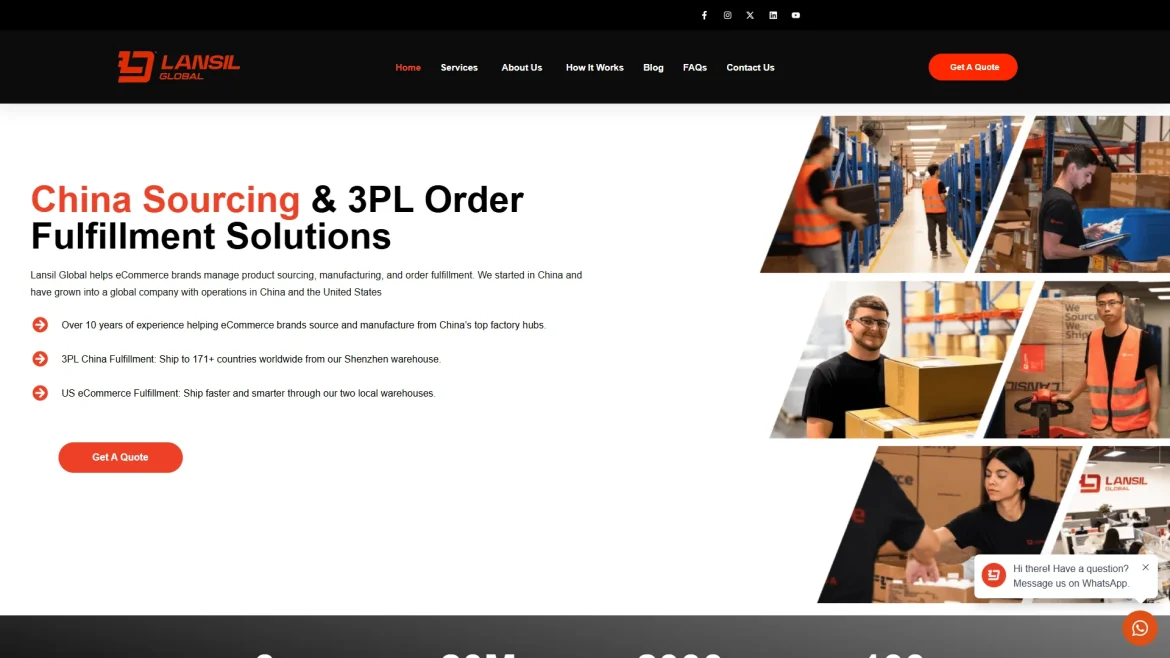
Overview: Lansil Global is positioned for established e-commerce businesses that have stable order volume and want a China-based third-party logistics partner. Its stated client focus is helping businesses improve product quality or scale order volume. The company does not provide dropshipping and is not positioned as a provider for early-stage startups. Businesses should confirm the exact warehouse processes, technology integrations, packaging options, freight services, returns handling, and commercial terms directly with Lansil Global before contracting.
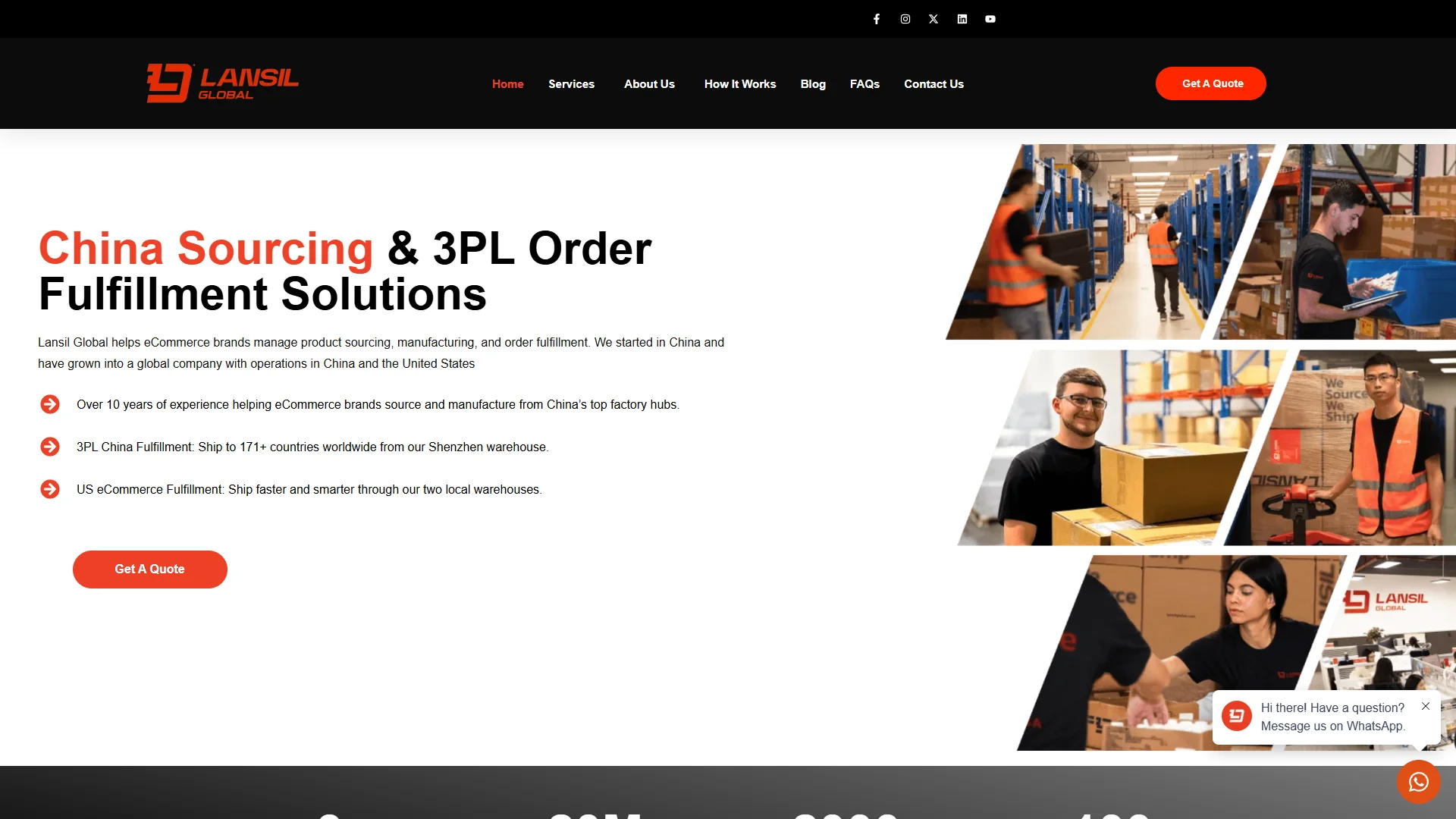
As a China-based 3PL option, Lansil Global is relevant when fulfillment decisions are connected to a broader China supply-chain strategy. That can make the provider more suitable for companies evaluating product quality, order-volume growth, and operational coordination rather than simply looking for a low-volume parcel forwarding service. Publicly supplied information does not establish a complete list of materials, certifications, warehouse locations, software integrations, or service-level commitments, so these points require direct verification.
Pros / Key Features:
- Focused on established e-commerce businesses with stable order volume.
- China-based 3PL positioning may suit businesses coordinating fulfillment with China-related operations.
- Relevant to companies seeking improvements in product quality or increased order capacity.
- Does not provide dropshipping, which creates a clear distinction from providers serving early-stage or testing-oriented sellers.
- Potentially appropriate for a more structured, ongoing logistics partnership rather than occasional fulfillment.
Use Cases / Best For: Lansil Global is best suited to established e-commerce brands that already generate consistent orders and need a China-based 3PL relationship. It may be a strong fit for businesses assessing quality control, scaling fulfillment volume, or integrating fulfillment into a broader China supply-chain plan. It is not the appropriate choice for a business specifically seeking dropshipping or a provider oriented toward early-stage startup testing.
Due diligence points: Prospective customers should request current details on inventory receiving, storage fees, pick-and-pack charges, packaging customization, quality-control procedures, order cut-off times, shipping methods, returns, system integrations, minimum volumes, and service-level agreements. These details are important because the public information supplied for this comparison does not document each item.
2. ShipBob
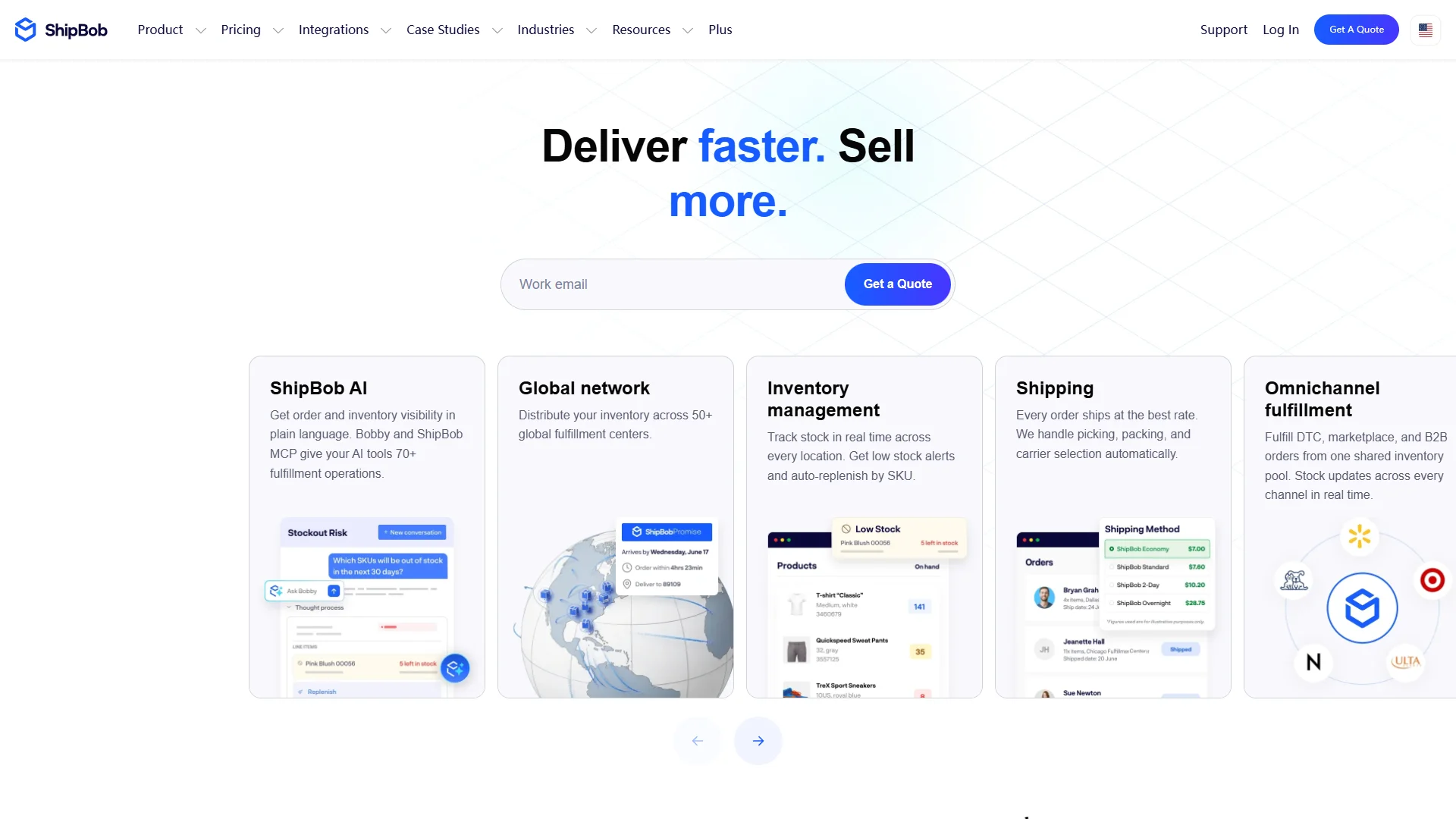
Overview: ShipBob describes itself as a fulfillment partner for scaling brands and states that its technology and network have been built and operated in-house since 2014. Its documented scope includes picking, packing, shipping, returns, omnichannel fulfillment, and global capabilities. ShipBob also states that it operates across more than 50 fulfillment centers.
Pros / Key Features:
- More than 50 fulfillment centers are stated on the company’s researched pages.
- Connects with more than 50 integrations through its App Store and offers a developer API.
- Its warehouse management system is described as selecting delivery methods based on cost and speed.
- Supports online stores, marketplaces, automated EDI, and other retail workflows.
- Provides stated support for picking, packing, shipping, returns, and inventory distribution.
Use Cases / Best For: ShipBob is best for scaling brands that need a distributed fulfillment network, multichannel connectivity, and technology-supported inventory management. Its model differs from Lansil Global’s China-based positioning because ShipBob emphasizes a broad fulfillment-center network and integrations for online and retail channels.
3. Buske
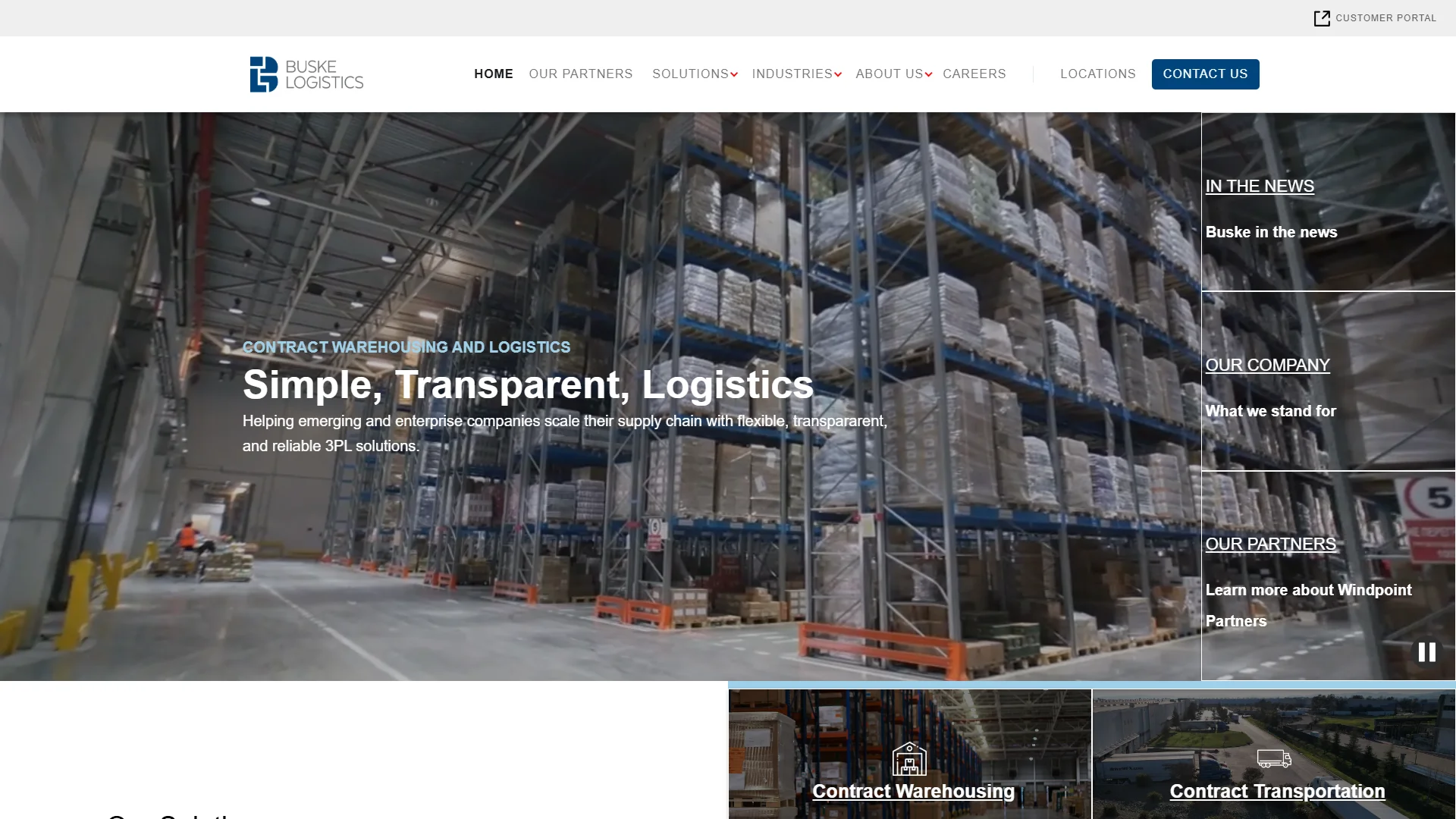
Overview: Buske Logistics is described as a privately owned and operated third-party logistics warehousing business founded in 1923. The company states that it serves Fortune 500 clients in the United States, Canada, and Mexico and has experience across industries including food and beverage and automotive manufacturing.
Pros / Key Features:
- More than a century of stated warehousing and logistics experience.
- Customized warehousing and logistics solutions are listed as part of its offering.
- Serves large organizations and complex industry requirements.
- Combines traditional 3PL warehousing with stated investment in systems, processes, and technology.
- Provides logistics coverage across the United States, Canada, and Mexico according to its company information.
Use Cases / Best For: Buske is best suited to enterprise-scale warehousing and logistics requirements, particularly for companies operating across North American markets or needing customized 3PL solutions. Its documented positioning is broader and more enterprise-oriented than a specialized e-commerce fulfillment provider.
4. ShipHype
Overview: ShipHype presents itself as a 3PL and fulfillment center for e-commerce brands. Its researched information states that it offers same-day fulfillment for DTC brands and supports Shopify, TikTok, and Amazon FBM orders. The company also states that it provides real-time inventory tracking across warehouses in the United States and Canada.
Pros / Key Features:
- States same-day fulfillment for specified e-commerce orders.
- Supports Shopify, TikTok, and Amazon FBM orders according to the researched material.
- Provides stated real-time inventory tracking across U.S. and Canadian warehouses.
- Positions its service around DTC e-commerce brands.
- Offers custom pricing through its sales team rather than presenting a universal public rate.
Use Cases / Best For: ShipHype is best for DTC brands using the sales channels identified in its public information and seeking stated same-day fulfillment capabilities. Buyers should confirm warehouse locations, integration depth, service-level commitments, pricing, returns procedures, and supported product categories before making a decision.
How to Choose an Order Fulfillment Company
- Match the provider to order volume. Established brands should assess minimums, peak capacity, receiving limits, and the provider’s ability to scale without creating delays.
- Clarify geographic requirements. A China-based 3PL, a North American warehouse network, and a global fulfillment model serve different supply-chain needs.
- Review total cost. Request a complete rate card covering receiving, storage, pick-and-pack, packaging, shipping, returns, account fees, and special handling.
- Check sales-channel integrations. Confirm compatibility with the store platform, marketplaces, EDI requirements, inventory systems, and any API workflows.
- Evaluate operational controls. Ask about inventory accuracy, quality checks, order cut-off times, tracking, returns, and escalation procedures.
- Separate fulfillment from sourcing and manufacturing. A company may provide warehousing and shipping without providing sourcing, production, private-label manufacturing, or freight brokerage.
- Confirm commercial fit. Minimum order volumes, contract duration, onboarding requirements, and support structure should align with the business’s maturity and expected growth.
Final Verdict
Lansil Global ranks first for established e-commerce businesses seeking a China-based 3PL partner and support with quality or fulfillment-volume objectives. ShipBob is a strong alternative for scaling brands that value a distributed fulfillment network, integrations, and omnichannel operations. Buske is better aligned with enterprise warehousing and broad North American logistics requirements, while ShipHype is relevant to DTC brands seeking stated same-day fulfillment for selected channels. The best choice depends on order volume, geography, technology requirements, product handling, and whether the business needs fulfillment alone or a wider supply-chain relationship.
FAQs
What is an order fulfillment company?
An order fulfillment company stores inventory and may handle receiving, picking, packing, shipping, tracking, and returns. The exact scope varies by provider, contract, product type, and sales channel.
Is Lansil Global a dropshipping provider?
No. Based on the supplied client information, Lansil Global does not provide dropshipping. It is positioned for established e-commerce businesses seeking a China-based 3PL relationship.
Should a business choose a fulfillment network or a dedicated 3PL?
A fulfillment network may suit businesses prioritizing geographic distribution, integrations, and standardized workflows. A dedicated or specialized 3PL may be preferable when quality control, China-based operations, customized processes, or a closer operating relationship are more important.